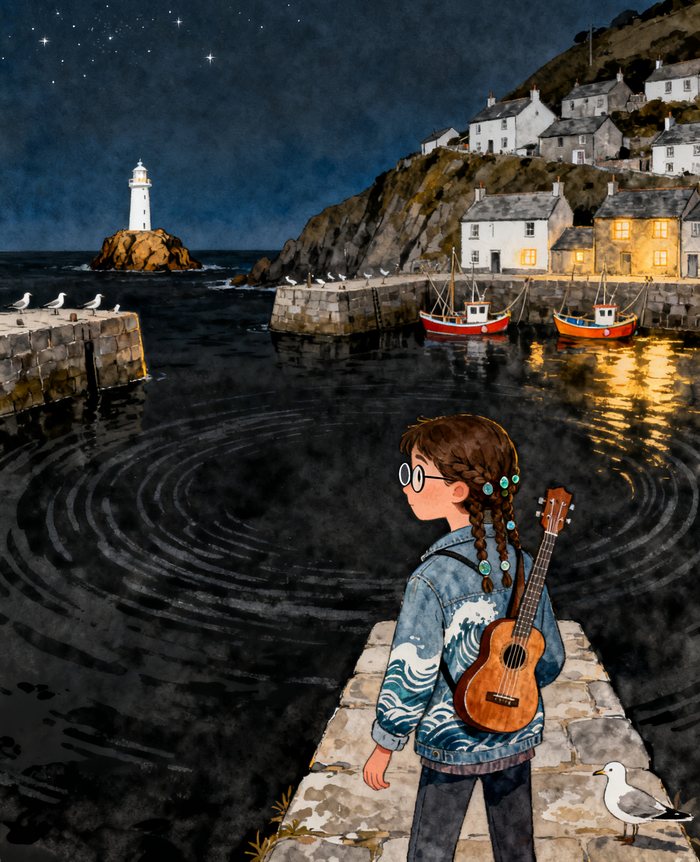
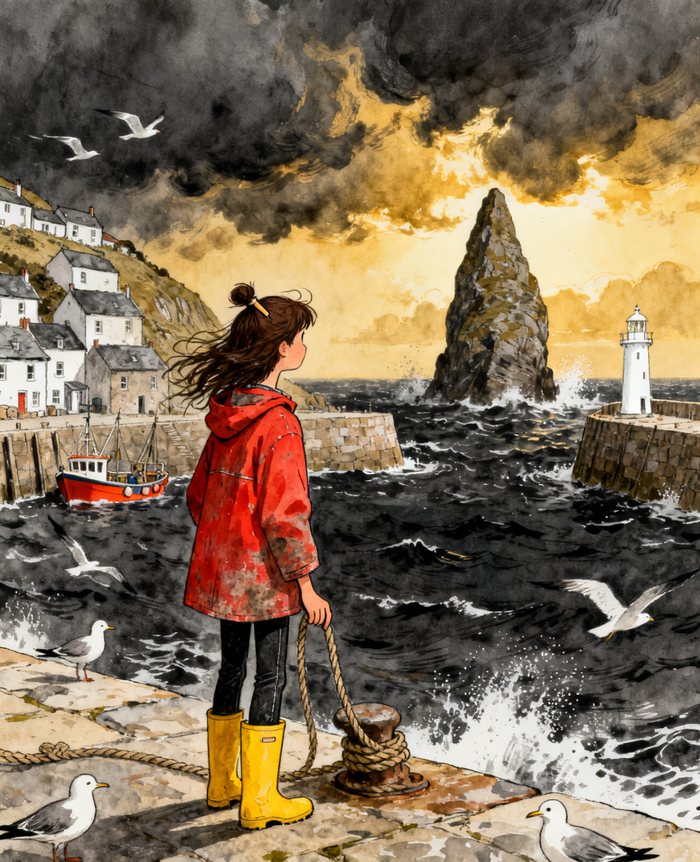
Pilchard's Polperran
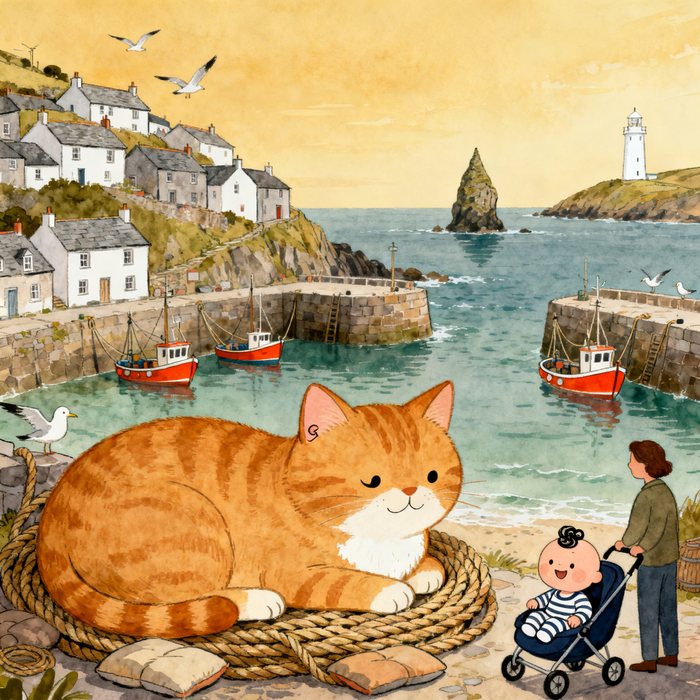
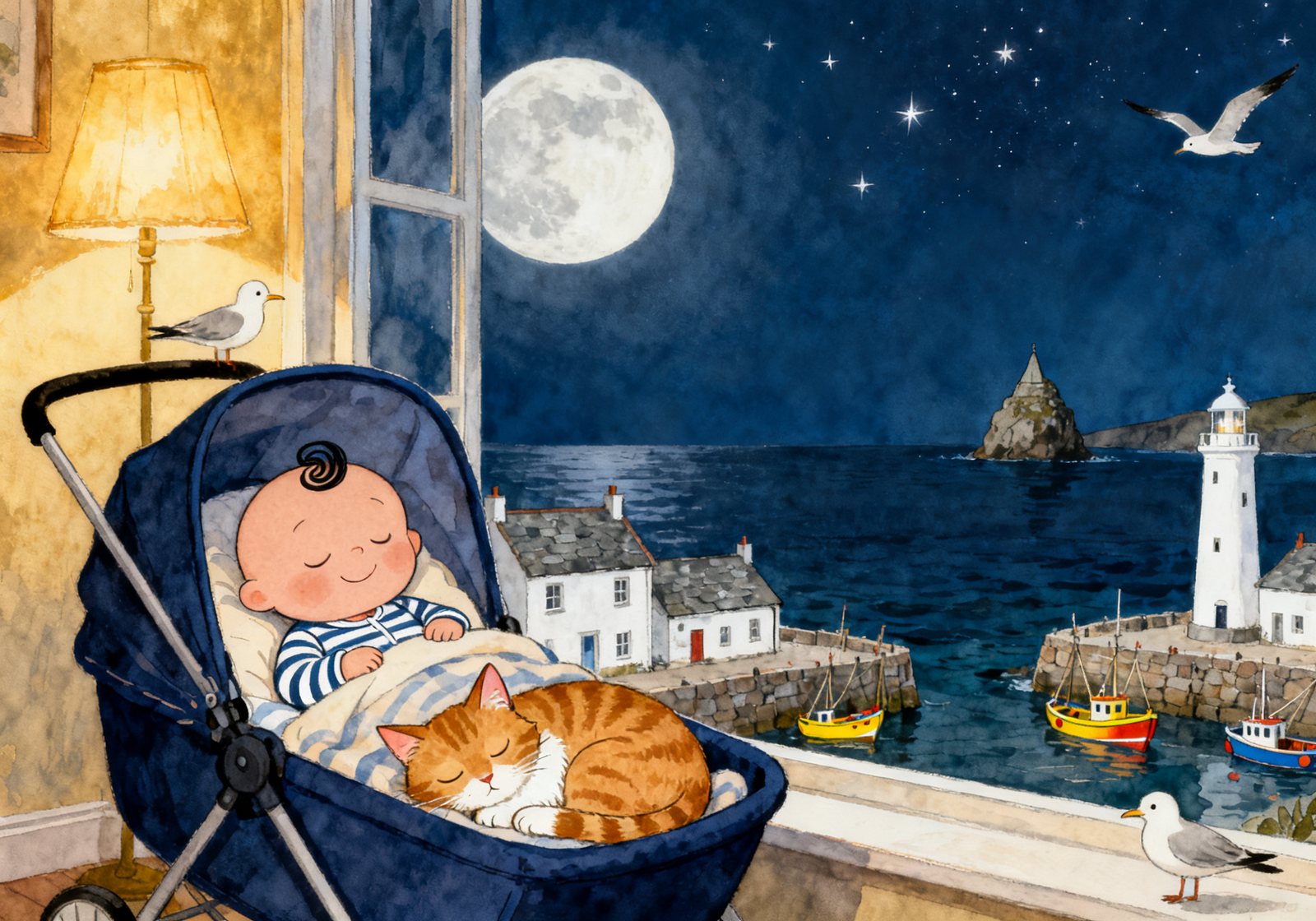
Pilchard the harbour cat pads through the village — first words, sounds, colours and goodnights, warm and safe, ending home in Baby Perran's pram.
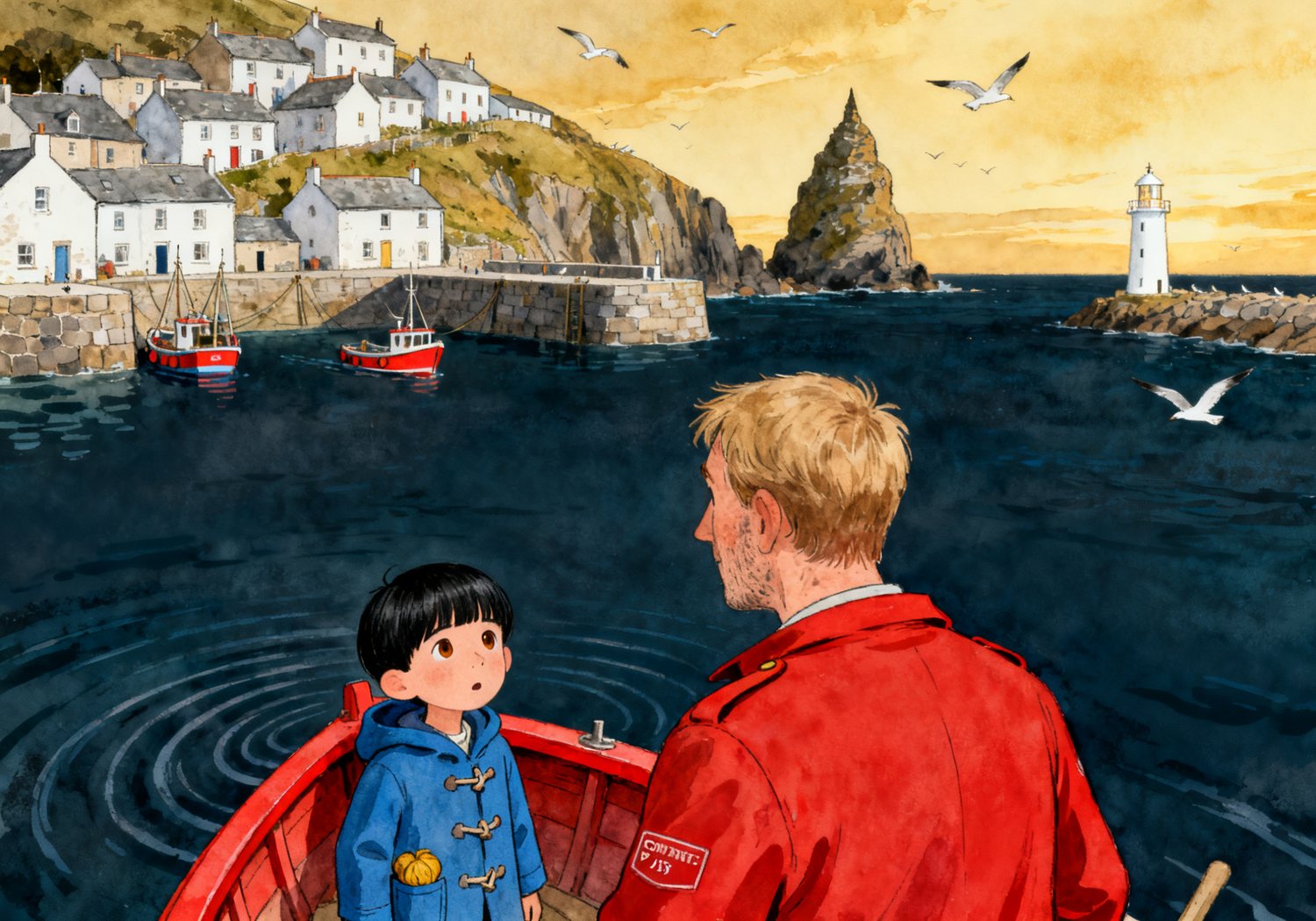
Polperran is a granite fishing village on Cornwall's south coast — whitewashed cottages stacked up a steep hillside, twin stone quays, small bright boats on the tide, and a bakery where every story in the village begins over a saffron bun.
It is also something rarer: a single storybook world built for every age of childhood. The harbour cat a baby meets in a board book is still padding along the quay when that reader, years later, opens a novel about the girl who hears a bell beneath the sea.
Same village. Same families. Same slowly-unfolding mysteries — told simply for little ones, and deeper with every shelf.
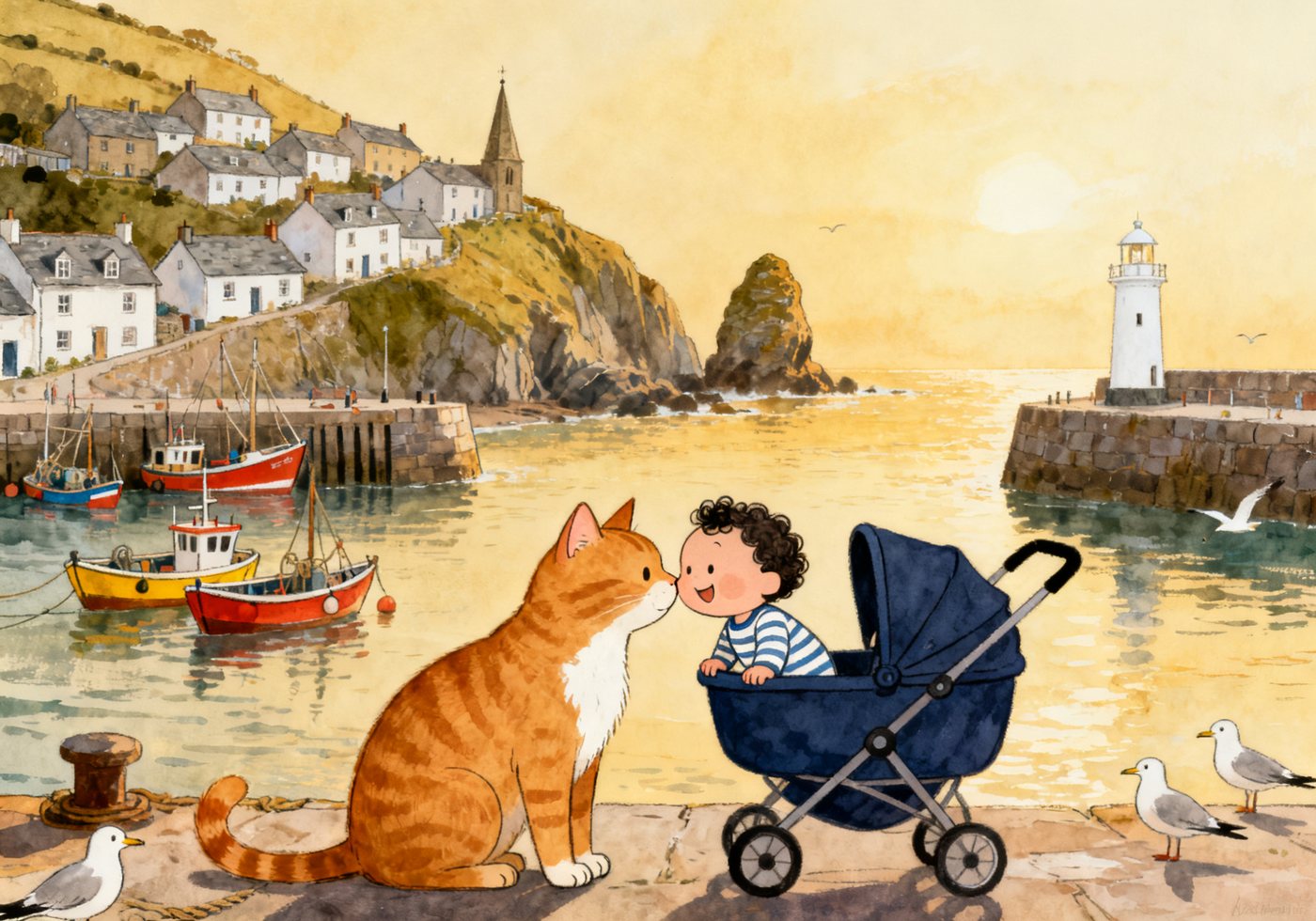
From the Fish Quay to the moor above, Polperran's map stays true in every book — so young readers learn its lanes the way they learn their own.
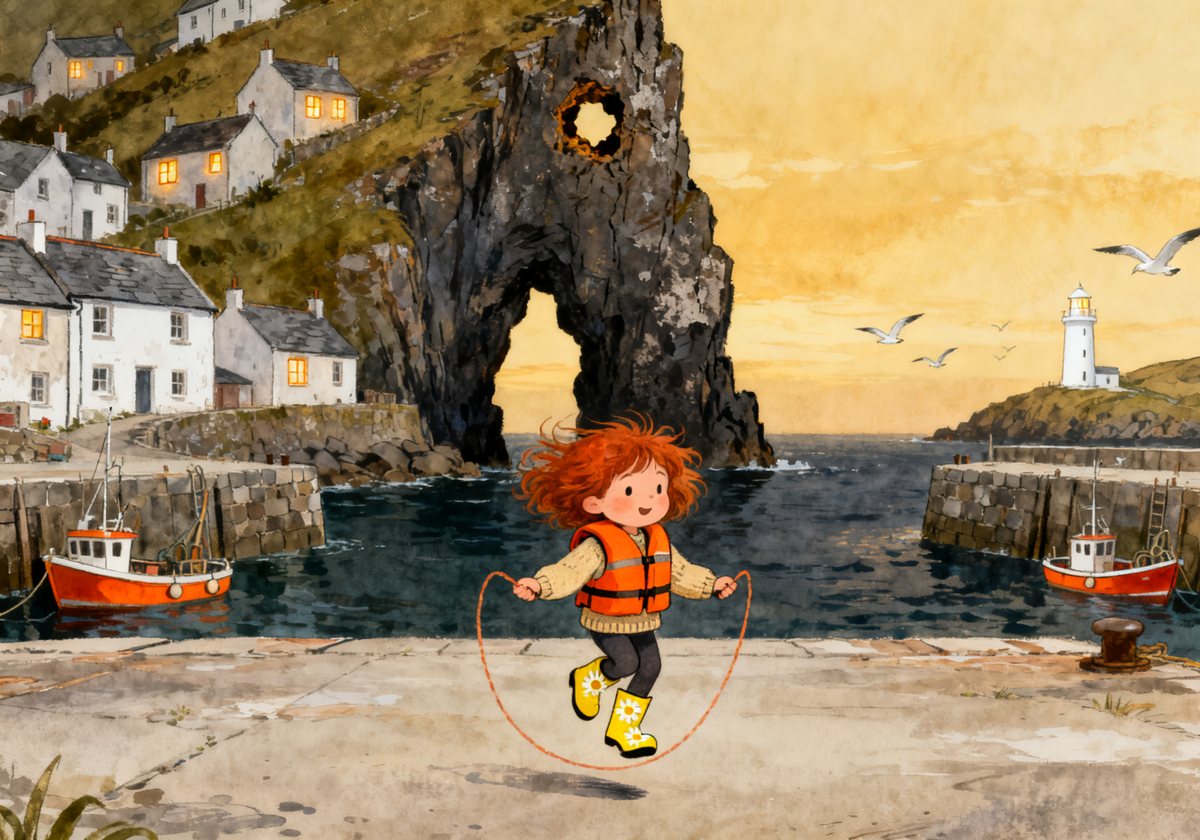
A jagged sea-stack shaped like a steeple, with a window the midsummer sun shines through. It isn't a church. That's the whole riddle.
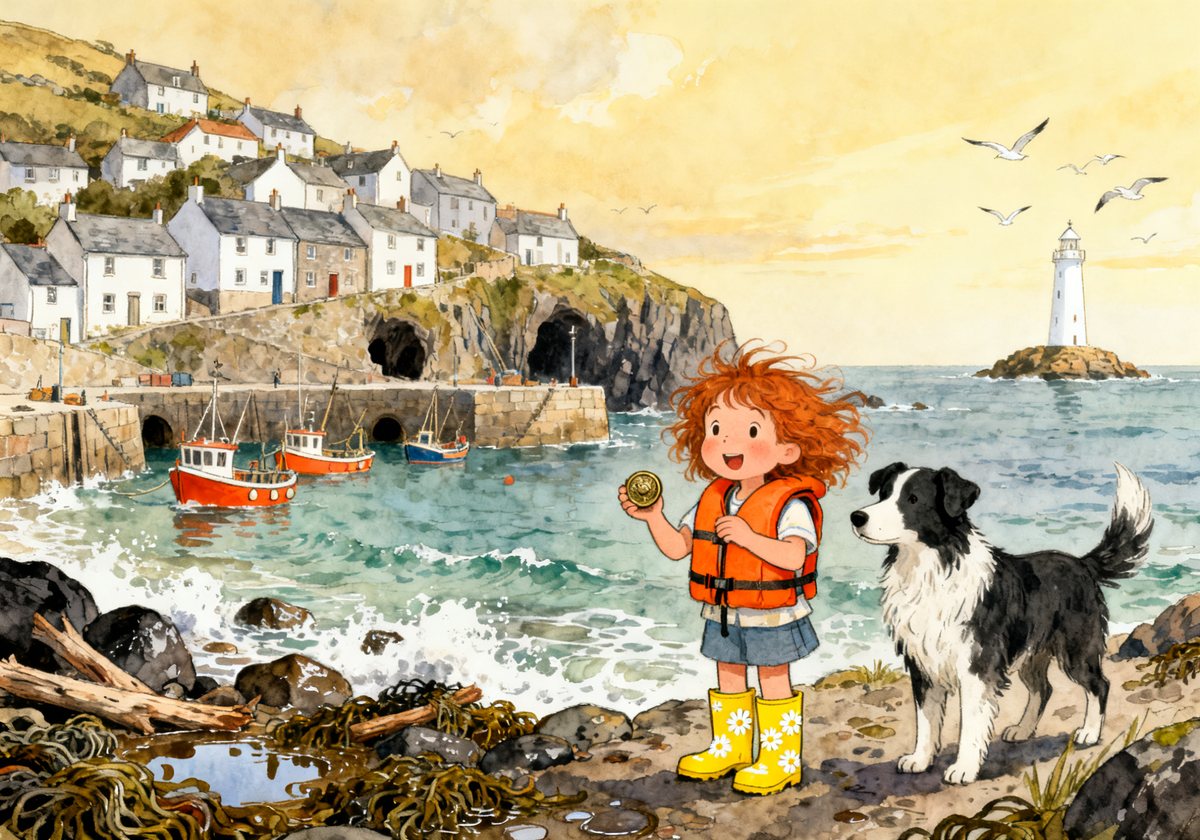
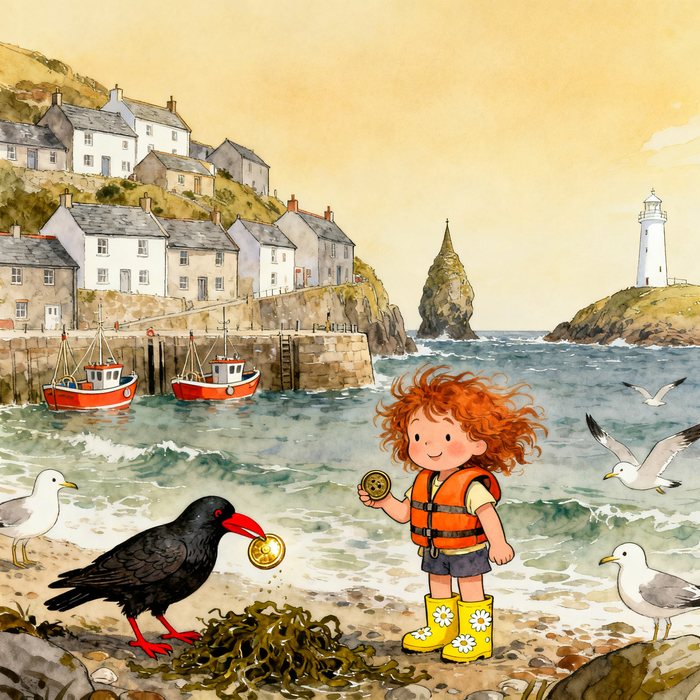
Reachable only at low tide. Caves, legends, and — after a big south-easterly blow — the odd gold coin in the seaweed. "Jenny's pennies," the village says.
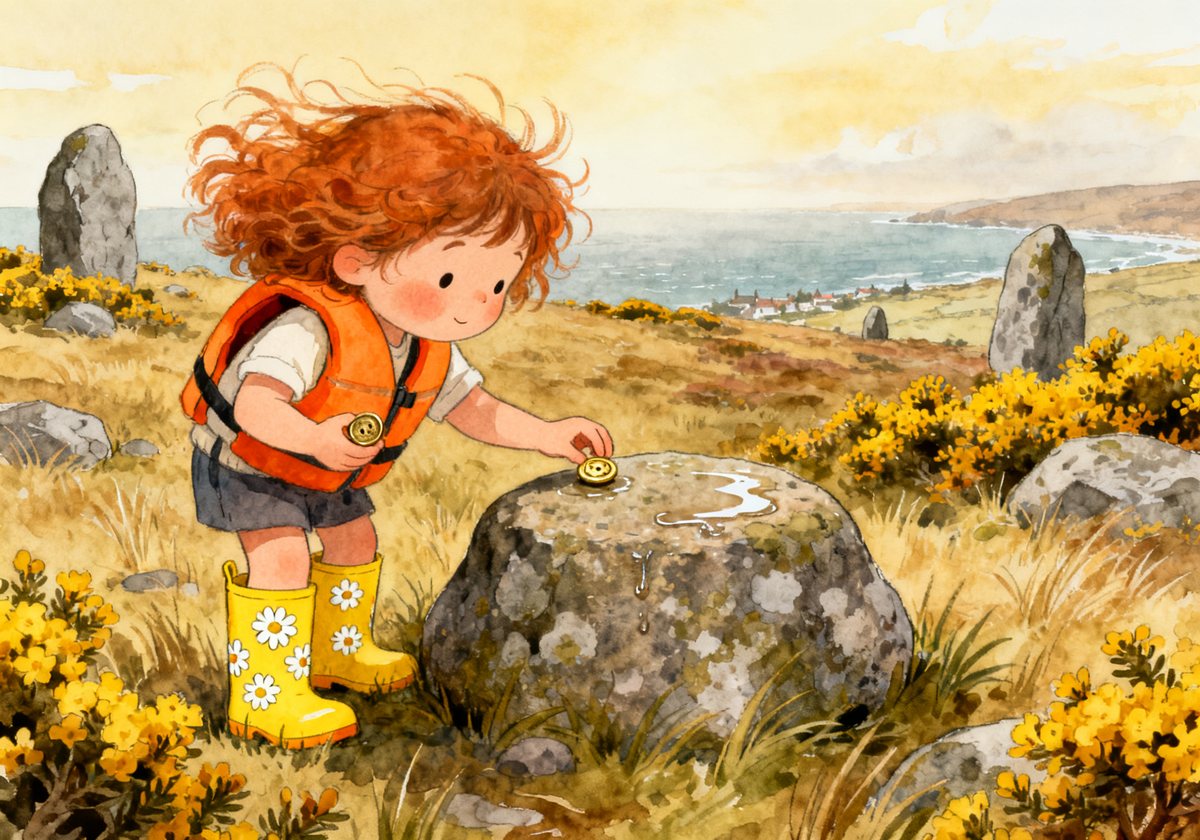
The tor on the moor above: a stone circle, yellow gorse, piskie country. Leave something shiny on the piskie stone and see what happens.
…and Chough's Bakery, warmest room in the village · Pendrym Point lighthouse · the little green island of Enys Vean · Nancarrow's Boatyard · the dark water of the Perran Deeps, where something very old is said to lie.
Polperran's folklore runs beneath every series like a tide. The littlest books treat it as a lullaby; the novels dare to ask if it's true.
Beneath the Perran Deeps lies the great bell of a drowned land. It rings before storms — and only the bell-touched hear it. It warns. And it calls.
Polperran's own pirate queen, who never touched a Polperran boat and twice left silver on the quay in famine winters. Her ship broke on Church Rock in 1721. Her treasure — the Penhale Hoard — has never been found.
Leave the first fish of the catch on the quay edge, and the sea-spirit keeps your boat safe. Forget, and knots slip. Nobody has ever seen him clearly. A wet shadow, maybe. A smell of storm.
Small, quick, helpful-if-respected. They braid ponies' manes, sour the milk of the rude, and adore shiny buttons.
"Where the church has no parson,
where the bell has no rope,
when the sun sits the window,
look under the hope."
Each series has its own author's voice and its own heroes — and every one grows out of the shelf before it.

Pilchard the harbour cat pads through the village — first words, sounds, colours and goodnights, warm and safe, ending home in Baby Perran's pram.

Tiny dramas for tiny people: a lost gumboot sails the harbour, a gold button goes to the piskies, and everything is resolved by teatime.

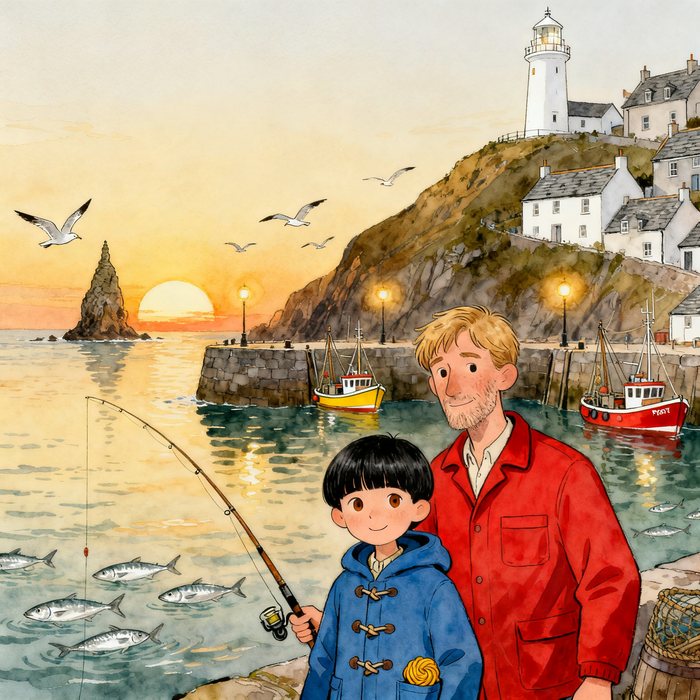
Musical read-aloud story-poems with a whisper of magic that is never quite confirmed. Did Kit really hear the sea sing? The book won't say.

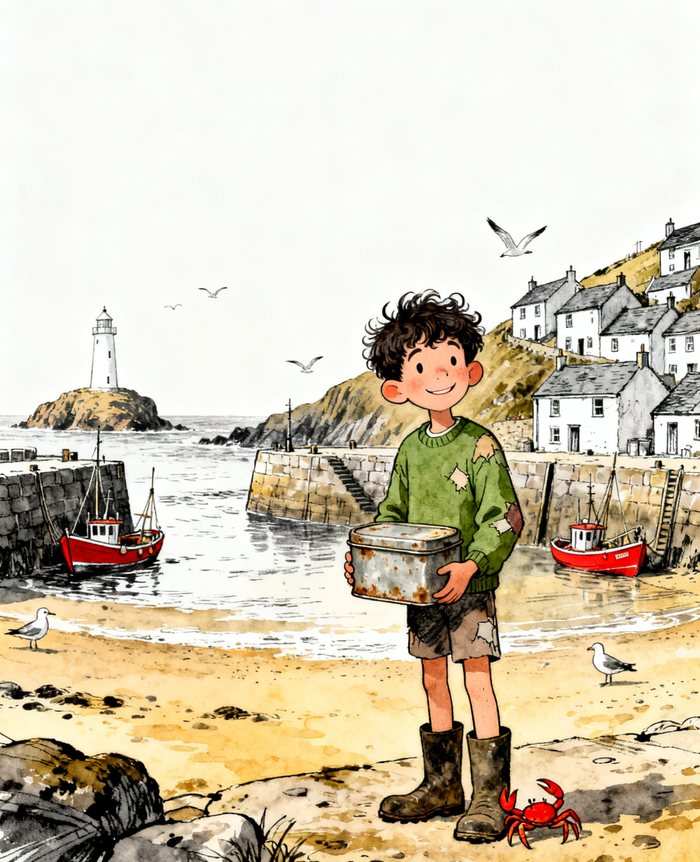
Jory Trevane keeps his clues in a biscuit tin. Short punchy chapters, cliff-hanger endings, and the first hints that the legends leave evidence.

Twisty but fair, with real stakes. When every boat comes home safe from a storm nobody forecast, Demelza Kellow wants to know who knew — and why they won't say.

Lowen Trevane wants to leave Polperran on a tall ship — until she hears the Drowned Bell, and learns what her family has been not-saying for generations.
Readers grow up alongside the village. The gull who stole a pasty in a toddler book is the same gull eyeing the catch in the novels — and the mystery seeded in a baby's board book (it was very old, and very gold…) is still waiting, shelves later, for someone brave enough to follow Jenny's rhyme.